
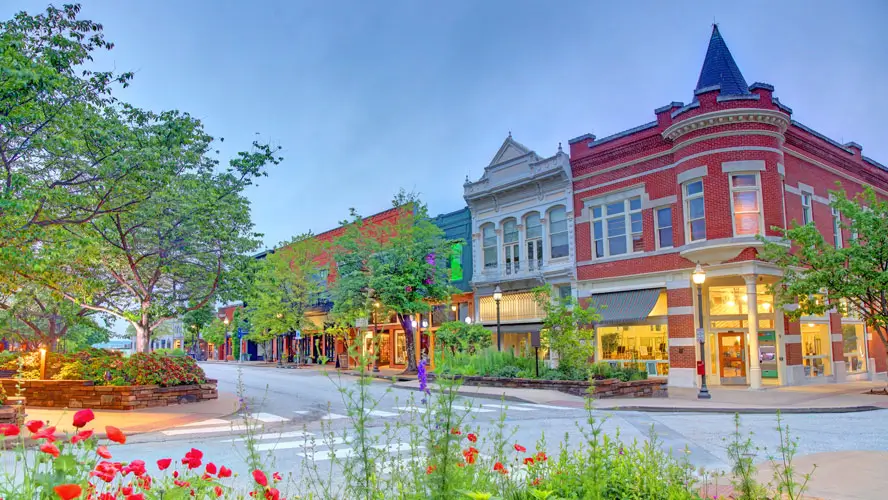
In the heart of Northwest Arkansas, Fayetteville blends small-town charm with the energy of a fast-growing metropolitan area. Known for its rolling Ozark hills, thriving arts scene, and the University of Arkansas, the City attracts thousands of students, commuters, and visitors daily. However, with that growth comes heavier traffic and, unfortunately, an increase in motor vehicle accidents.
Understanding where accidents are most likely to occur is the first step toward prevention and preparedness. When a collision interrupts your life, an experienced car accident lawyer in Fayetteville can help you secure compensation. Our team at LeVar Law Injury & Accident Lawyers is committed to guiding injury victims through the complex legal process and advocating for safer roads in our community.
A General Overview of Fayetteville’s High-Risk Roadways
Fayetteville’s traffic patterns are heavily influenced by the major corridors that connect the city to the wider Northwest Arkansas region. From high-speed interstates to busy downtown avenues, specific areas consistently see a higher volume and density of crashes.
An analysis of Fayetteville’s High Injury Network (HIN) reveals a critical pattern. A staggering 60% of all severe crashes resulting in a fatality or severe injury take place on just 12% of the city’s roadway miles. This clearly identifies certain corridors as disproportionately dangerous. The most frequent locations for car accidents in Fayetteville include major highways, key north-south routes, and the dense downtown area.
Interstates and Highways
Fayetteville anchors the southern end of the Northwest Arkansas corridor. Interstate 49 runs north-south along the City’s western side, connecting Fayetteville to Springdale, Rogers, Bentonville, and south to I-40 at Alma. It is the region’s main high-speed spine, and the segment is widely recognized as the freeway that carries most through-traffic around town. Beyond I-49, several U.S. and state routes connect neighborhoods to jobs, school, and shopping:
- US-71B (College Avenue): This is Fayetteville’s traditional north-to-south “Main Street” and a primary commercial route running through the heart of the City.
- US-62 (MLK Jr. Boulevard / Mission Boulevard): These routes are the main east-west corridors. They serve the University of Arkansas campus and connect the south and east sides of the City. High traffic volumes and the complexity of recent work zones managed by ArDOT underscore the critical role they play.
- AR-112 (Garland Avenue / Razorback Road): A vital north-south link, this highway connects the university area and I-49 to Northwest Fayetteville. Its significance and history of collisions are reflected in its ongoing multi-year improvement program.
- AR-16 (Wedington Drive / Huntsville Road), AR-45 (Mission Boulevard), and AR-265 (Crossover / Old Missouri Road): These are wide, high-speed arterial roads. They efficiently connect various neighborhoods to the main highway system and handle significant daily commuter traffic.
These high-volume corridors form the backbone of the places where crashes concentrate.
Fayetteville’s Most Dangerous City Streets and Corridors
Within the City, several main streets and intersections stand out for their high crash volumes. These areas combine heavy traffic, complex design, and high pedestrian and cyclist activity, creating a worst-case scenario for accidents.
North College Avenue (US-71B)
North College Avenue is perhaps the most dangerous corridor in the City, often referred to as Fayetteville’s “Main Street.” It is a primary north-south route with an Annual Daily Traffic (ADT) count of approximately 37,000 vehicles. Its history as a five-lane state highway, widened in the 1970s without adequate pedestrian accommodations, contributes to its current high-risk status.
Fayetteville’s HIN analysis reports that in a recent four-year period, North College Avenue had an alarming 1,252 total crashes and 13 that resulted in fatalities or severe injuries. This high number underscores the road’s dangerous design.
Rear-end accidents are frequent, often occurring during rush hour due to drivers following too closely or failing to notice sudden stops. Left-turn collisions are also prevalent, as drivers misjudge the speed and distance of oncoming traffic. Distracted driving is a significant factor here due to the road’s heavy congestion.
Downtown Fayetteville
The combination of narrow streets, high pedestrian traffic, cyclists, and busy intersections makes the downtown area, particularly around Dickson Street and West Avenue, a collision-prone zone. T-bone collisions are common at downtown intersections due to drivers failing to yield or running traffic lights.
Pedestrian-involved crashes are also a significant concern, often happening when drivers fail to yield at marked crosswalks. The nightlife of Dickson Street also contributes to nighttime incidents, often involving alcohol consumption.
High-Volume Intersections
In general, intersections are responsible for a large percentage of all car accidents. In Fayetteville, certain major intersections are particularly notorious. The intersection of North College Avenue and East Joyce Boulevard is one of Fayetteville’s busiest intersections.
Its proximity to major highways contributes to speeding. The design of the intersection, which features wide turns, increases the risk of sideswipe accidents, especially involving commercial trucks. The frequency of drivers attempting to pass through a yellow light also leads to a high rate of rear-end crashes.
School Zones
With the City’s many schools, accidents frequently occur in and around school zones. Impatient drivers, improper parking, and a high volume of young pedestrians create dangerous conditions, emphasizing the need for drivers to be vigilant and adhere to all school zone signals.
South School Avenue (US-71B)
As part of the same major corridor as College Avenue, South School Avenue also presents a risk, especially as it serves several transit stops and social service destinations and has long, wide segments that invite higher speeds.
According to Fayetteville’s HIN analysis, a 0.56-mile section of South School experienced 107 total crashes and three fatal or severe injury crashes over a recent four-year period, indicating an ongoing safety problem. The city has explored a road diet here to improve safety for people walking, biking, and catching the bus.
Recent Car Crash Statistics for Fayetteville, AR
The data highlights a significant ongoing problem with traffic safety in Fayetteville and the surrounding region. It is crucial to look at the numbers to accurately grasp the extent of the risk:
- Total Crashes: According to the Arkansas Department of Transportation (ARDOT), Fayetteville reported a total of 2,946 crashes in 2024.
- Fatal Crashes: During the same period, there were seven fatal injuries in the City.
- Suspected Serious Injuries: The City of Fayetteville experienced 34 serious injuries resulting from accidents in 2024.
- Suspected Minor Injuries: Motor vehicle accidents caused 190 minor injuries in 2024.
- Possible injuries: Nearly 270 possible injuries resulted from crashes in 2024.
- Vulnerable Road Users (VRUs): The City’s HIN report indicates that VRUs, including pedestrians and bicyclists, are involved in only 3% of all crashes but account for 33% of all severe injury and fatal accidents. This is a disproportionately high number, underscoring the severe risks faced by those outside of a vehicle.
The numbers confirm that car and truck accidents in Fayetteville are a constant and serious threat to drivers, passengers, cyclists, and pedestrians. The Arkansas Center for Health Improvement (ACHI) reports that Arkansas has the fourth-highest roadway fatality rate in the country.
The Most Common Types of Car Accidents in Arkansas
While accidents can happen in countless ways, our firm often sees certain types of collisions that are symptomatic of driver behavior and road design in Fayetteville and across the state of Arkansas:
Rear-End Collisions
These are the most common types of accidents, especially prevalent on high-traffic roads like College Avenue and I-49. The ARDOT reports 1,065 rear-end accidents in Fayetteville in 2024. They are frequently the result of a distracted or inattentive driver failing to stop in time. This can be due to:
- Distracted Driving: Texting, talking on a cell phone, or engaging in other activities that take a driver’s eyes or mind off the road
- Tailgating: Following another vehicle too closely, leaving insufficient time and distance to react to a sudden stop
Rear-end collisions often result in whiplash, other neck and back injuries, and concussions.
T-Bone (Side Impact) Accidents
Collisions at intersections frequently occur when a driver runs a red light or stop sign or fails to yield the right-of-way. These side-impact crashes, often called T-bone accidents, can cause severe injuries to the occupants on the side of the impact, including traumatic brain injuries and broken bones.
This is a common occurrence at busy Fayetteville intersections. According to the ARDOT, 973 of Fayetteville’s accidents in 2024 were these side impact collisions.
Drunk Driving Accidents
Impaired driving remains a major cause of serious and fatal crashes across Arkansas. According to the Arkansas Highway Safety Office, roughly one-third of traffic deaths involve alcohol.
Drivers operating a vehicle while intoxicated or actively distracted have slower reaction times, impaired judgment, and reduced coordination, leading to devastating accidents. These incidents are a clear example of driver negligence.
Pedestrian and Bicycle Accidents
Due to the city’s active lifestyle and pedestrian-friendly downtown areas, Fayetteville experiences a higher risk of accidents involving pedestrians and cyclists. Drivers failing to yield at crosswalks or neglecting to check for cyclists when turning are common causes. Given the vulnerability of these road users, these accidents often result in the most catastrophic or fatal injuries.
How LeVar Law Injury & Accident Lawyers Can Help After a Fayetteville Crash
If you or a loved one has been injured in a car accident in Fayetteville, the financial, emotional, and physical burdens can be overwhelming. Dealing with insurance companies while recovering from an injury is often frustrating and confusing. This is where an experienced legal advocate becomes essential.
At LeVar Law Injury & Accident Lawyers, our legal team of dedicated car accident attorneys fights for the rights of accident victims across Arkansas. We understand the local roads, the common patterns of negligence, and the legal strategies needed to litigate a car accident case successfully. Our comprehensive approach to your case includes the following:
Thorough Investigation and Evidence Collection
We immediately launch a full investigation into your accident. This includes securing the official accident report, gathering witness statements, obtaining traffic camera footage, and consulting with accident reconstruction experts when necessary. For accidents on key corridors like College Avenue, we investigate the history of crashes at that location to build a strong argument for known dangerous conditions.
Determining Fault and Liability
Arkansas operates under a modified comparative fault system. This means that you must be less than 50% responsible for the accident to recover compensation. Our job is to prove that the other driver’s negligence was the cause of your injuries. This involves demonstrating that the at-fault driver breached their duty of care and that this breach directly caused your injuries and losses.
Calculating Full and Fair Compensation
A severe car accident results in more than just property damage. We work to help you recover compensation for all aspects of your loss, which may include:
- Medical Expenses: Past, present, and future costs related to your injuries, including hospital stays, surgeries, physical therapy, and medication
- Lost Wages: Compensation for time missed from work and loss of future earning capacity
- Pain and Suffering: Damages for the physical pain, emotional distress, and loss of enjoyment of life resulting from the accident
- Property Damage: Cost to repair or replace your vehicle or other items damaged in the accident
Our goal is to ensure that every element of your loss is accounted for, allowing you to focus on recovery while we focus on achieving the justice and compensation you deserve.
Negotiation and Litigation
Insurance companies are powerful organizations whose primary goal is to minimize the amount they pay out. A car accident attorney can handle all communication and negotiation with the insurance adjusters, protecting you from common tactics used to undermine your claim. While a favorable settlement is often possible, we prepare every case as if it is going to trial, ensuring we are ready to present a compelling case before a judge and jury if necessary.
Contact LeVar Law Injury & Accident Lawyers If You Were Injured in an Accident in Fayetteville
A car accident can change your life. You may face physical pain, mounting medical bills, and uncertainty about your financial future. Attempting to handle a complex personal injury claim on your own can lead to a significantly lower settlement or, worse, having your claim denied.
By choosing LeVar Law Injury & Accident Lawyers, you gain an advocate who is familiar with the specifics of car accident law and is committed to upholding justice against powerful insurance companies. If you have been injured in a crash on one of Fayetteville’s dangerous roadways, seek legal help today. Schedule a free consultation with our Fayetteville car accident lawyers today to begin your journey toward justice and recovery. You can also reach us by phone at (888) 220-7068.